
Office of the future, what it means for your office design
Just a couple of years ago, the future of the office was very much seen as it had been for the last few decades. Sure, technology and flexible working practices were having impact around the edges but, on the whole, for most it was more of the same.
But, then there was a worldwide pandemic which has challenged us all to think about the way we work, where we work and what we want it to be in the future.
So where does that leave us?
Will we move back to how it has always been or will this truly be the push to a new way or working.
Currently, it is very much evolving as businesses and individuals grapple with moving forward.
This blog shares some thoughts on what the office of the future could look like, some food for thought…
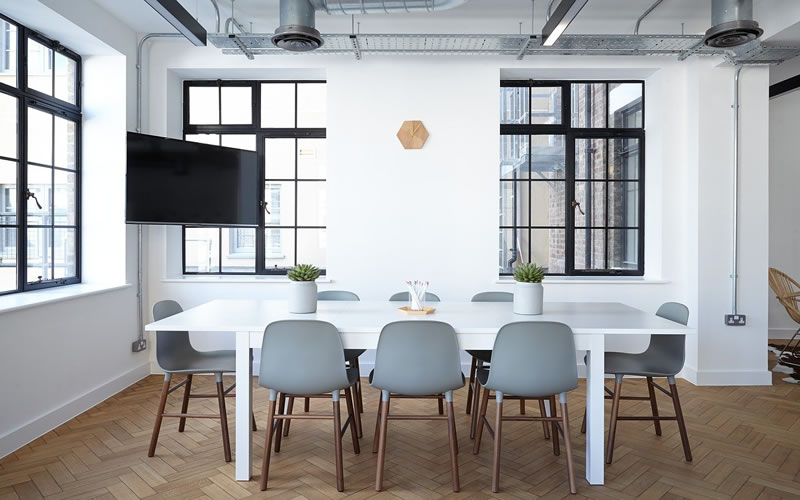
Demise of the office as we know it?
People have predicted the demise of the office for years, yet it still remains.
Although many believe that modern technology will mean the end of the traditional office setup altogether, it is unlikely that will happen anytime soon.
However, changes to working practices do mean that the modern workspace is constantly evolving and new ideas are taking precedence.
More people are working from home, especially in the wake of the COVID-19 pandemic, and this is likely to continue long-term.
Traditional ideas about working practices have changed too, and employers now recognise the importance of collaborative spaces that are easily adaptable to different working styles.
If businesses are to create productive spaces for their employees, they need to consider the office design trends of the future. But what will the office of the future look like?
Employee-Centric Offices
We are already seeing a shift towards employee centric offices with an increased focus on comfort and wellbeing.
Typical cubicle layouts are being phased out and replaced with a workspace trend that leans towards social spaces to enhance employee downtime.
Office interiors are less ‘business-like’ than they used to be and creativity is allowed to flourish.
Adding social spaces
In the future, it is highly likely that office design will continue in this direction because there are numerous benefits to incorporating social spaces.
Research shows that it improves communication and collaboration between staff members and increases overall employee wellbeing, which ultimately increases productivity.
Practical elements can also be introduced to office interiors to improve employee comfort in a direct way. New research into the potential health risks of sitting for long periods, for example, has inspired a lot of interest in standing desks and adjustable ergonomic furniture.
There is also a focus on office design that improves the health of employees. For example, more companies are including an on-site gym in their workspace.
Adapting outdoor areas and parking sites to make them more cycle-friendly is also popular too.
A focus on health
Health is a particular concern right now in the post-COVID office and there are a number of technological solutions that can be employed to prevent the spread of infection.
Things like UV lighting to kill bacteria or spray-on antiviral films for surfaces, for example, can create much cleaner office interiors. Thermal imaging can even be used to detect whether employees may be sick or not.
Even after the pandemic is over, many of the safety measures that were put in place in offices will be here to stay. Employee absenteeism is estimated to cost the UK economy £77.5 billion a year, so anything that can reduce it is a priority for businesses and will become a central part of office interiors.
Designing with an employee focus
In the future, office design will start from the ground up and everything will be built with the employees in mind.
Business owners are beginning to recognise that employee wellness has a direct impact on engagement and productivity, so it pays to create an office environment where people are comfortable, happy and healthy.
Employees are also changing their priorities and wellness and work-life balance is often more important than salary, so it is crucial that office designers consider this in the future.

Accommodating Flexible Working Practices
In the past, it was believed that the cubicle layout was the most efficient office design because it reduced distractions and allowed for improved focus.
In recent years, companies moved towards open plan layouts because they believed it would create a more collaborative environment and foster creativity, while also improving employee engagement and wellbeing.
Open plan, closed, hybrid?
However, evidence shows that they did not always have the desired effect.
In open plan offices, those that do not want to interact with their employees will still find ways to avoid collaboration and maintain the individual working practices that they did in a cubicle layout.
The reason for this is that open plan office design assumes that everybody works best when social interactions and collaborations are increased, and that simply is not true.
While some are more productive as part of a team, others do their best work when they are isolated from distractions and can work alone.
Understanding these differences between employees is key to the future of office design.
We are only now beginning to understand the best ways to work, and they differ for everybody.
Although many people say that the traditional 9 to 5 is not productive, it is the most efficient way to work for some people. However, others prefer a more flexible schedule and people are at their most productive at different times of the day.
The pandemic forced businesses to adopt flexible working practices and allow people to work from home and many found that they preferred this way of working.
Need to accommodate all working styles
Although people are returning to their normal work schedules, many are reluctant to do so and it has opened the door to more flexible working practices in general.
Office design will reflect this as businesses aim to create spaces that accommodate all working styles.
Collaborative and private working spaces
Team working spaces that encourage collaborative work will be important, but these are likely to exist alongside isolation pods for focused, private working for those that prefer it.
With more people working from home some or all of the time, there will be less need for a dedicated workspace for each employee. This opens up a lot of new options and changes the way that we think about office design.
Customisable, adaptable workspace
Overall, office interiors will be focused on building a customizable workspace that can adapt depending on the current need.
For example, cafeteria areas may double as group workspaces outside of normal dining times. Open plan offices will make use of movable dividers that can change the layout of the space in seconds.
As business owners and their employees become more aware of their own work styles and what environment they are most productive in, office design trends will change to create spaces that facilitate all employees.
Co-working spaces
The way that different companies will interact in the office environment will also change, and we are already seeing examples of this today.
Coworking spaces are becoming incredibly popular as businesses that allow employees to work from home have no need for a large, dedicated office space that they can access at all times. Instead, single desks or meeting rooms are rented on a short-term basis as needed.
This trend will change the way that entire office buildings are designed. Instead of having a large commercial building with a number of separate offices on each floor, we will see flexible spaces with a constant flow of businesses coming in and out.
As a result, office interiors must be less business-specific and there must be a strong focus on customisation and adaptability.
Check out our blog on creating agile working spaces.

Managing Environmental Impact
Environmental issues are an increasing concern and in order to combat them, all aspects of our society must change in some way.
In the business world, making an effort to reduce our impact on the environment is already a key concern when it comes to attracting and retaining customers.
People are far less likely to buy a product if it is not produced in a sustainable and ethical way.
However, this priority also extends to the job market and many people will consider the environmental impact of the company as a whole and the office space when deciding who they want to work for. As a result, sustainability will certainly be a key factor in office design in the future.
Reducing energy demands
Technology has a huge role to play here and the office of the future must embrace automation solutions to help reduce energy usage in the workplace.
Interconnected networks with sensors and AI technology can automate light and heating systems, measure pollution levels, and assess plumbing for potential issues, all while constantly making small adjustments to save energy.
The use of these advanced systems, alongside basic changes like using LED lighting, means that office interiors can be designed to reduce carbon emissions to a net zero. Eventually, this will be the baseline for all offices and any businesses that cannot meet this standard will not be looked upon favourably.
The focus on eco-friendly offices also extends to the initial office design and layout.
By increasing natural light, for example, you reduce the need for artificial lighting and reduce electricity demand. As a result, many architects are building modern offices with larger windows or even full glass panelling along one side.
The materials that are used to construct new office buildings will also be increasingly directed by sustainability. They must be materials that can insulate the office well and reduce energy usage from heating systems, but they must also be sourced in a sustainable way too.
Repair, recycling, repurposing, reusing
The circular economy concept will undoubtedly direct the future of office design and interiors too. Our current model can be described as a take-make-waste model, which means we extract resources, use them, and then dispose of them.
Currently, many environmental solutions aim to tackle the ‘waste’ aspect of this model by finding solutions to recycle. The circular economy concept aims to remove waste at the design stage and, in terms of office design, this means constructing buildings with materials that can be reclaimed and reused.
From an architectural standpoint, buildings will be designed so that they can be dismantled more easily and materials remain intact so they can be repurposed.
In terms of office interiors, there will be more focus on repairing things and restoring furniture items instead of throwing them out and replacing them.
Smaller offices
In general, it is likely that offices will become smaller.
It is estimated that the COVID-19 pandemic caused a 10.7% drop in carbon emissions and this is largely because fewer people were on the roads and businesses consumed less energy.
If companies want to continue reducing their impact on the environment, creating smaller office spaces and using office interiors that are customisable is one of the most effective solutions.
Embracing Robotics and AI Technology
We hear a lot of discussion about how robotics technology will impact the world of work, but it is usually based around manual tasks.
Advanced robots are now able to manage a lot of the practical tasks in warehouses or manufacturing facilities, for example. Driverless vehicles are set to change the way that the haulage industries work too.
But how will robotics impact office design?
Office security
Office security is one area where robotics are likely to make a big impact. Security cameras with facial recognition software will be able to use intelligent machine learning algorithms to assess the area and allow entry to authorized personnel while denying it to others.
This essentially negates the need for a security patrol as this task is already built into the office interiors.
In the boardroom
New technology will also revolutionise the way that information is displayed in the boardroom.
Interactive tables and walls fitted with screens and multimedia displays will allow for presentations and displays that go beyond anything we have ever seen.
Augmented reality technology also creates so many opportunities for visualising things in a 3D space right in the middle of your boardroom.
In this respect, office design and office interiors are likely to be very stripped back. Eventually, the majority of the functionality will exist in a digital space, rather than a physical one.
Too far fetched? We already see this in a relatively minor way with things like cloud storage technology and jut remember how far mobile phones and tech has come in the last decade already!

Office Design set to continue to Change and Evolve
Office design is something that is constantly changing and evolving as the way that we work changes.
In recent years, there has been a shift towards agile/flexible working practices and new technology has made it easier than ever for people to work from home.
New automation technology is making certain tasks obsolete while creating new ones at the same time, and there is a strong focus on sustainability in the workplace too.
The recent COVID-19 pandemic has accelerated many of these changes and given us a glimpse of what office design and office interiors will look like in the future, and it’s likely that many of these new design concepts are here to stay.
Helping you create inspiring office design
 Feeling inspired or a little bit overawed?
Don’t worry, help is at hand. Great office design is what we do… taking a lot of ideas, adding a dash of creativity, and bringing it all together in one plan to meet your needs.
We work with businesses across the UK on office design, space planning, interior fit outs and refurbishments. If you are considering a new office design, talking to an expert team like Source One Consulting is the best place to start.
Get in touch now for a free, no obligation chat.


